



Treadmill Buying Guide: How to Choose the Best Treadmill for Your Home
Table of contents
- 1. How Will You Use Your Treadmill?
- 2. Types of Treadmills
- 3. Motorised Treadmills
- 4. Folding Treadmills
- 5. Walking Pads
- 6. Curved Treadmills
- 7. How Much Space Do You Need for a Treadmill?
- 8. Treadmill Motors: How Much Power Do You Need?
- 9. Treadmill Speed: How Fast Does Your Treadmill Need to Go?
- 10. Treadmill Belt Size and Cushioning
- 11. Treadmill Incline: What It Is and Why It’s Worth Using
- 12. Consoles, Programmes and Apps: Which Features Are Worth Having?
- 13. Treadmill Weight Limits and Safety Features
- 14. Finding the Best Treadmill for Your Home
Are you looking for a quality treadmill? Having one at home can make fitting regular runs into your routine much easier. Whether it’s escaping the unpredictable UK weather, skipping queues for equipment or avoiding the commute to your local gym, there are plenty of reasons why a treadmill of your own can be a worthwhile investment.
But with so many types of treadmills and different models to choose from, how do you know which is the best treadmill for you? In this treadmill guide, we’ll cover everything you need to look out for when picking a new running machine for your home gym.
How Will You Use Your Treadmill?
The first thing to consider when choosing a home treadmill is how you’ll be using it. Will you mainly be walking? Are you planning to train for a marathon? How often will you use your treadmill? Will other people in your household be using it too?
The answers to these questions will help you decide which type of treadmill is right for you and which specifications are worth paying attention to.
Types of Treadmills
Let’s quickly touch on the different types of treadmills available:
Motorised Treadmills
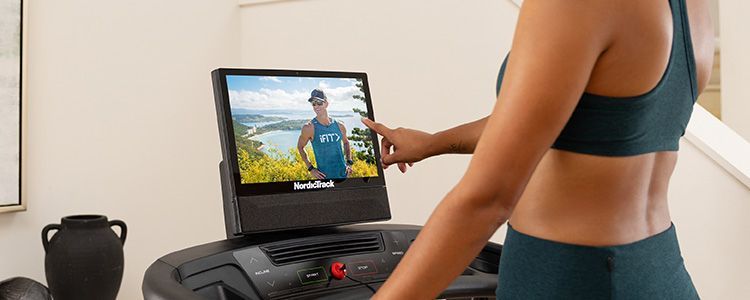
The classic treadmill design, motorised treadmills are ideal for consistent running, walking and interval training at home. They often offer cushioning for comfortable runs, incline settings and high top speeds.
Folding Treadmills
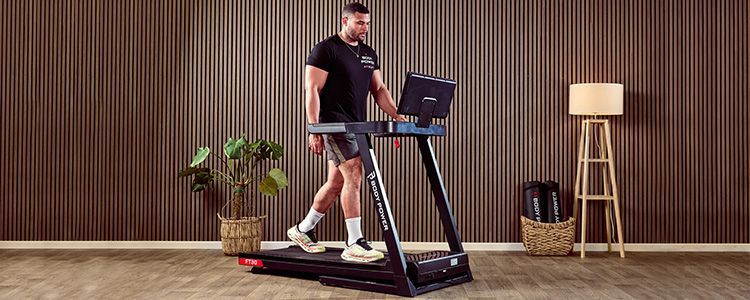
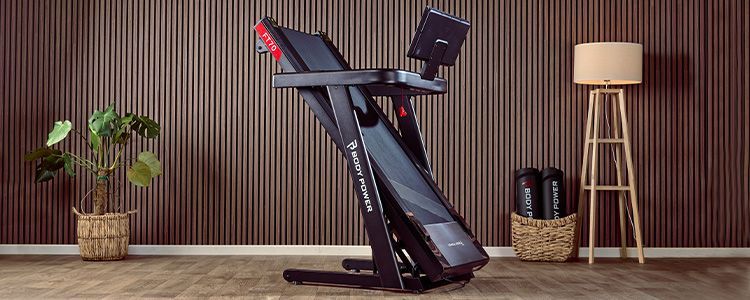
Folding treadmills are well-suited to home gyms with limited space. After you’ve finished your run, the deck can fold up to reclaim that floor space.
Walking Pads
Tackle a sedentary lifestyle and hit your step target throughout the day with a walking pad. These treadmills are lightweight, portable and often compact enough to be stored under a bed or sofa.
Curved Treadmills
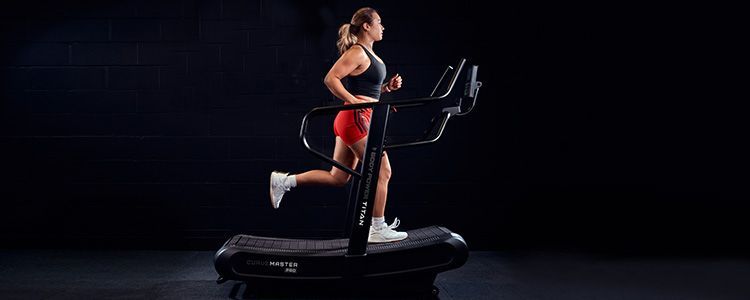
A curved treadmill is a manual, self-powered running machine where the belt speed is controlled by your own movement and intensity. Curved treadmills are ideal for circuits and HIIT workouts.
How Much Space Do You Need for a Treadmill?
Before committing to a treadmill, you need to be sure it will fit in the space you’ve earmarked for it. Safety clearance matters just as much as the size of the machine, so be sure to measure the whole room, not just the size of the treadmill. Manufacturers often recommend free space on either side of the treadmill, plus plenty of room behind it – sometimes two metres or more!
Taller runners will need to pay attention to their ceiling height too. Add the treadmill’s step-on height measurement to your own height (plus a buffer) to be certain there’s enough headroom.
Treadmill Motors: How Much Power Do You Need?
The treadmill’s motor needs to be large enough to withstand its use – the heavier the use, and the heavier the user, the more power is required. When comparing a motor’s horsepower, look at continuous horsepower (CHP), not peak horsepower. CHP refers to the power a treadmill motor can sustain over extended periods.
As a general guide, for walking and light training, choose a treadmill with at least 1.5 CHP. If you’re jogging or running, opt for 2.5 CHP or more, and for sprinting or high-intensity workouts, go for a treadmill with a minimum 3.0 CHP motor.
Treadmill Speed: How Fast Does Your Treadmill Need to Go?
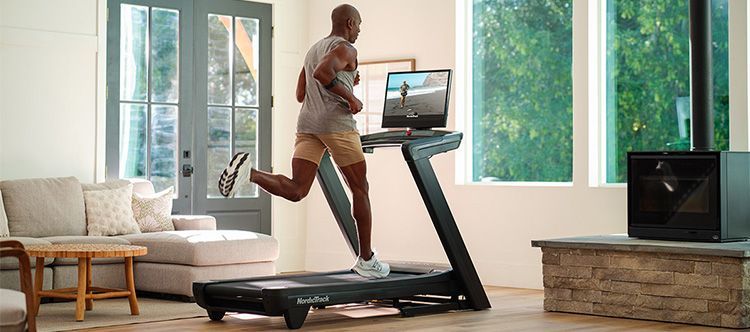
Another important treadmill feature to consider is its top speed. Most motorised home treadmills have maximum speeds ranging from around 12 km/h to 20 km/h, although some higher-performance models can reach 22-25 km/h. If you’re planning to use your treadmill for interval workouts or fast sprints, look for a model towards the top end of this range to make sure it can keep up with your pace. For walking or light jogging, a treadmill with a lower top speed should be more than sufficient.
Treadmill Belt Size and Cushioning
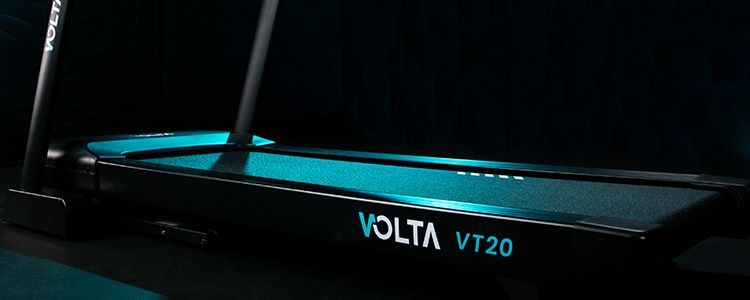
A running belt that’s too short or narrow can feel quite claustrophobic while running – you want to be sure there’s plenty of room for your stride and gait at all paces. While the right treadmill deck size for you is very dependent on your height and stride length, walkers can generally afford to go for a smaller deck (around 120cm x 45cm), while runners should look for something longer and wider (150cm x 50cm or more).
Cushioning is a tough metric to compare between treadmill models – it’s not a consistent measurement across all brands. The more cushioning a treadmill offers, and the more advanced that cushioning system, the less impact you’ll feel on your joints while running. Some treadmill models even let you turn the cushioning on and off, depending on the response you want. A high level of comfort might be great for some runners, but others might prefer a harder, more accurate “road feel”.
Because a treadmill’s cushioning is so subjective, it’s always a good idea to test out some treadmills at your nearest store to find your preference!
Treadmill Incline: What It Is and Why It’s Worth Using
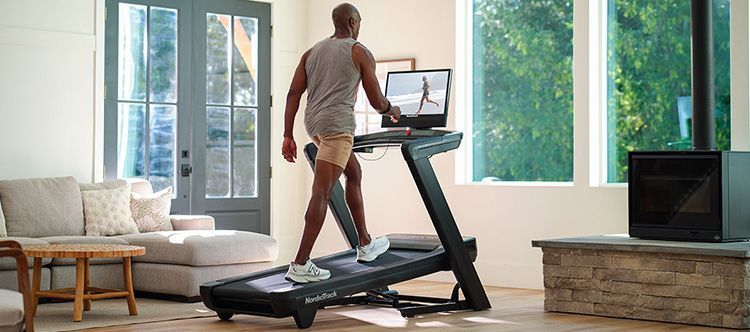
An incline function raises the front of the treadmill’s deck to simulate running or walking uphill. Increasing the incline makes your workout more challenging without necessarily having to increase your speed. It can raise your heart rate and engage more muscles than walking or running on a flat surface. Adding a level of incline on your treadmill can also help you prepare for upcoming events and outdoor routes with hills.
A lot of home treadmills now feature some form of motorised incline range that’s easily adjustable mid-workout, with some higher-end models also adding a decline function. Some specialised incline trainers can even reach levels of 40% – great for steep hikes – which is much higher than your average home treadmill.
Consoles, Programmes and Apps: Which Features Are Worth Having?
A treadmill’s console should give you access to all the basic metrics you need during a workout, such as your speed, time, distance and calories burned. Depending on the model, you may also get built-in workout programmes that automatically change the speed and incline for you, offering a level of training variety without having to constantly adjust the treadmill yourself. Treadmill consoles can range from straightforward LED screens to large, high-end touchscreens for extra immersion.
Some treadmills also connect to apps via Bluetooth, like iFIT, Zwift, Kinomap, Peloton and FitShow. These apps can offer everything from guided workouts and structured training plans to virtual routes and performance tracking, but note that some would require a subscription.
Treadmill Weight Limits and Safety Features
Safety is an important consideration when choosing a treadmill, particularly if you’re new to running at home. Look for features like a safety key, which clips on to your clothing and stops the belt if you lose your balance or move too far back on the belt. It’s also worth checking the treadmill’s maximum user weight to make sure it’s suitable for everyone who’ll be using it. As a general rule, a little extra capacity can be useful, particularly if the treadmill will be used regularly for running.
Finding the Best Treadmill for Your Home
Now you know what to look for, start by setting a budget, measuring your available space and deciding how you’ll use your treadmill. Think about the features you really need, whether that’s a higher top speed for running, an incline for hill training or a folding design to save space.
Once you have a clear idea of your requirements, compare models to find one that suits your home, training goals and budget. You can also visit your nearest Fitness Superstore showroom to try out different treadmills in person and find the right running machine for you.


 Processing
0 Comments
No comments yet. Be the first to share your thoughts.
Leave a comment
Log in to leave a comment